Which psychosocial treatment approaches for preventing depressive symptoms in children and young people are most effective?
Which psychosocial treatment approaches for preventing depressive symptoms in children and young people are most effective?
Psychosocial interventions have significant potential for preventing depression in children and adolescents, but there is still uncertainty about which approaches are most effective — particularly across different target groups, levels of risk, and contexts such as schools and families. Systematic reviews show mixed results and highlight the need for a better understanding of which components are effective, which children benefit most from the interventions, and how they can be implemented and scaled in ways that produce lasting impact.
Prosjekt
Echo Optimizing a group-based school intervention for children with emotional problem.
Read more about the project hereOnline parent intervention to prevent anxiety disorders in at-risk children
Read more about the project herePromote mental health among at-risk adolescents in Malaysia
Read more about the project hereNews and stories

Former Kavli Trust Chair Appointed Knight of the Order of St. Olav
Former Chair of the Kavli Trust, Supreme Court lawyer Pål W. Lorentzen, has been appointed Knight First Class of the Order of St. Olav.

Mental health support for refugee children
Can group conversations be a crucial first step in addressing post-traumatic stress (PTSD) in refugee children?

Foundations – a force we must put to use now
Exclusion. Mental ill health. Climate crisis. Rising inequality. We live in a time defined by complex challenges – challenges that demand more than one solution, more than one actor, and more than one approach. In the face of all this, there is a resource that remains underutilised: foundations.
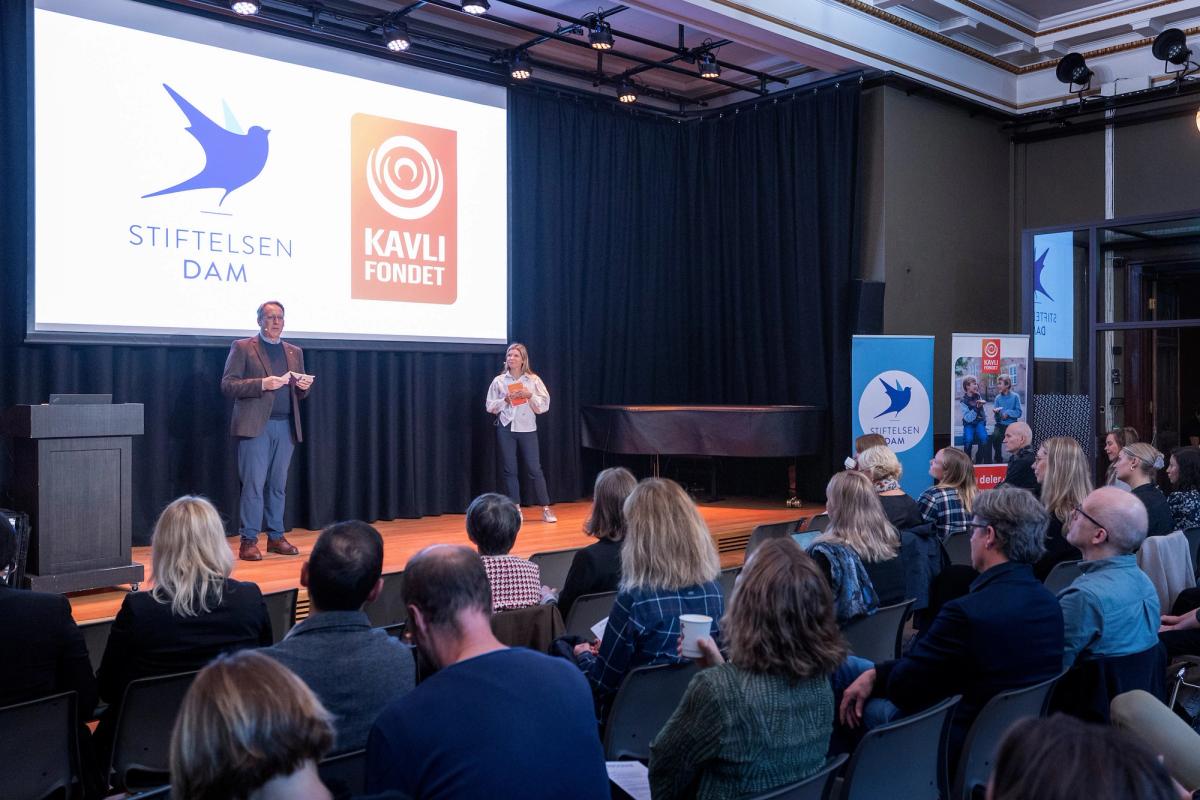
Compounding impact by sharing knowledge
Facilitating knowledge sharing between recipients of grants from the Programme on Health Research is a priority to Kavli Trust.